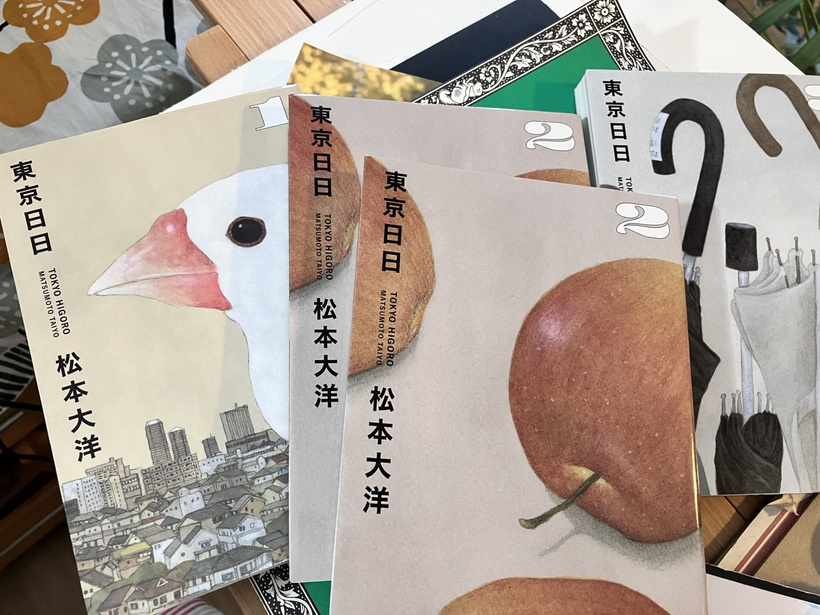
Visual Storytelling in Manga: Analyzing “Tokyo These Days” from Taiyo Matsumoto
Tokyo These Days tells the story of a manga editor who quits his job at a publishing company and sets out to create his own manga magazine. Along the way, he visits various artists to invite them to contribute, and searches for bookstores that might help distribute the magazine. Through this process, you get to see the different situations each manga artist faces in the industry—who chooses to chase their dreams, and who chooses reality. Yet everyone’s love for manga shines through, even those who decide to stop drawing do so because they love it too deeply.
Not only Tokyo These Days, but all of Matsumoto Taiyō’s works carry profound meaning and philosophy in their stories and dialogue. He often uses metaphor as a way to express emotion. I remember last year—or maybe the year before—after finishing The Cat of the Louvre, I thought, “Matsumoto Taiyō is my second best friend” (the first being Kafka). He speaks the words I’ve always wanted to say. Within his characters, you can find reflections of your own experiences, worldviews, and thoughts—it’s deeply resonant.
Matsumoto Taiyō’s manga are the books I can read again and again. I’ve collected Sunny(ebook), Takemitsu Zamurai, The Cat of the Louvre, and Tokyo These Days — apart from Sunny, I haven’t read that one yet — and the other three are so beautifully drawn that they’re the reason why I wanted to collect these copies. I didn’t expect that after finishing them I’d feel compelled to revisit those images and re-experience the emotions they evoke. The way the compositions are arranged creates an immersive, slow-reading sense of time — it’s a wonderfully pleasant experience. I’ve read The Cat of the Louvre six times; the frontispages are even starting to come loose. I keep asking myself: why do Matsumoto Taiyō’s manga never get stale no matter how many times I read them? Is it that his paneling and composition aren’t rigid? I feel that description doesn’t quite capture it. After thinking carefully and comparing his work with other manga, I realized there are other reasons as well. I’m jotting down what I discovered in Tokyo These Days here — I hope to apply these findings to my own narrative illustration in the future.
As for his visual narrative techniques, I have six observations:
- Imperfect, organic lines.
- A strong sense of spatial depth.
- Storytelling through environment.
- Distinct panel composition on every page.
- Thoughtful choice of “camera angles”.
- Expressive use of long shots (distant views).
Imperfect, organic lines
Unlike many manga artists, all of Matsumoto’s lines have a hand-drawn, organic quality — slightly shaky, yet completely natural. Even buildings and man-made objects are drawn this way. These imperfect lines create a sense of closeness; they remove the distance between the reader and the world on the page. Not only the characters, but every object seems to have its own personality — everything feels alive in that moment.
The overall style isn’t realistic, yet it feels true. The characters don’t seem like people who exist only in manga; they’re the kind of people you might actually meet in everyday life. Try observing the people around you — when they talk, when they sit — they’re rarely stiff; most are relaxed, even a bit slouchy, and their posture is often far from perfect (XD). Matsumoto captures this perfectly, showing how these “bad postures” naturally create folds and wrinkles in clothing through his imperfect lines. Even the borders of the speech balloons vary, subtly expressing the mood of the dialogue!
A strong sense of spatial depth
Most manga tend to have a certain smoothness to them—the backgrounds are often empty or simplified. But in Matsumoto’s work, the sense of space feels endlessly expansive. It’s deep and vast, as if you could keep adding things into the scene and it would still feel natural. Everything within it feels tangible and real. Beyond one room, there’s always another door, and on the streets, one building leads seamlessly to another. You can always sense that, even at the vanishing point, there’s still another house or object existing just beyond view. Vast, like the real world.
Storytelling through environment
I never realized that carefully depicting backgrounds and everyday objects could be so powerful for storytelling. Every object conveys something about a character’s personality and the local culture. The scenes transform from flat spaces into fully three-dimensional worlds. Even the “white noise” within these scenes becomes one of the details I find myself missing after reading. This background sound evokes shared memories of daily life—like the hum of a subway or train station, where during those waiting moments, we’ve reflected on life countless times. That resonance sticks deeply in the mind.
It’s easy to immerse yourself in the story and feel what the characters are experiencing. In this manga, you can hear the rain, feel the humidity, notice the sound of people passing on the street, and even hear insects circling a hanging lamp. When it snows, the silence is so profound that the cold seems to seep into your skin. By carefully drawing the environment, Matsumoto lets readers fill in the sensory experience with their own memories.
Although the backgrounds are highly detailed, the careful distribution of light and shadow prevents them from feeling cluttered or overwhelming. The focal points remain clear, so your reading experience is never disrupted.
Distinct panel composition on every page
Every panel in Matsumoto’s work is unique—none of them feel repetitive—and the transitions between them never feel boring. They’re engaging and flow smoothly. By “smooth,” I mean that the chosen compositions always match the story; nothing feels abrupt, overly dramatic, or underplayed. Scenes that require drama feel dramatic, and moments that need subtle buildup are restrained appropriately.
The design of the panels also shapes how readers perceive the story’s rhythm. For example, a sequence of small consecutive panels makes the reading feel especially fast. His pacing feels organic; it doesn’t just move mechanically from one panel to the next. There’s a balance of fast and slow. Even during a rapid sequence of actions, the quick, dramatic panels are interspersed with brief pauses, allowing readers to focus and fully absorb the moment.
Thoughtful choice of “camera angles”
In many manga, the camera often sticks to mid-shots or a few close-ups of faces. Matsumoto, however, skillfully uses extreme close-ups to convey the emotions hidden beneath facial expressions—even showing just a single eye in a panel. I once mentioned to him that Germans usually look at the mouth when speaking, and I told him that we tend to focus on the eyes, using eye contact to convey a lot of subtle feelings.
His choice of “camera angles” is also highly varied. Aside from narrating from different perspectives, characters are rarely shown head-on or standing stiffly. Straight-on shots are reserved for moments when something needs to feel direct, emphatic, or complete—when the story calls for a clear, striking emphasis.
Expressive use of long shots (distant views)
Besides using long shots to establish the environment, the season, or the time of day, I noticed that Matsumoto often inserts a long shot right after an emotional moment. Time is still moving, but it seems to slow down, as if lingering in the present. Although the pace slows, the emotion ferments like pickles, deepening the sense of immersion and making the feeling in your heart rich and intense. Each of these long shots feels like a carefully crafted painting, filled with atmosphere and emotion. I really admire how Matsumoto Taiyō uses long shots so masterfully!
How can we practice?
A simpler, low-pressure way is to draw moments from your own daily life—without having to invent a new story. For example, yesterday on my way home from work, I saw storm clouds gathering in the distance and felt like racing against time and the cumulus clouds, trying to leave the heavy rain behind. Or you might recall a moment from a trip—the scenery, people, or events that left a strong impression. Take a small slice of that story and draw 1–2 consecutive images on A4-sized paper.
Another approach is to study other manga and imagine how Matsumoto Taiyō might depict a particular scene. If you can follow the story’s flow and think of ways to express the situation more effectively, that’s a sign you’ve started to grasp some key narrative concepts.
After reading Tokyo These Days, I felt inspired to give it a try myself, just to see what it feels like to draw manga. I was a bit scared at first, but by starting with a small project and going through the entire process once, I now have a much clearer understanding of the challenges manga creators face and how they overcome them.
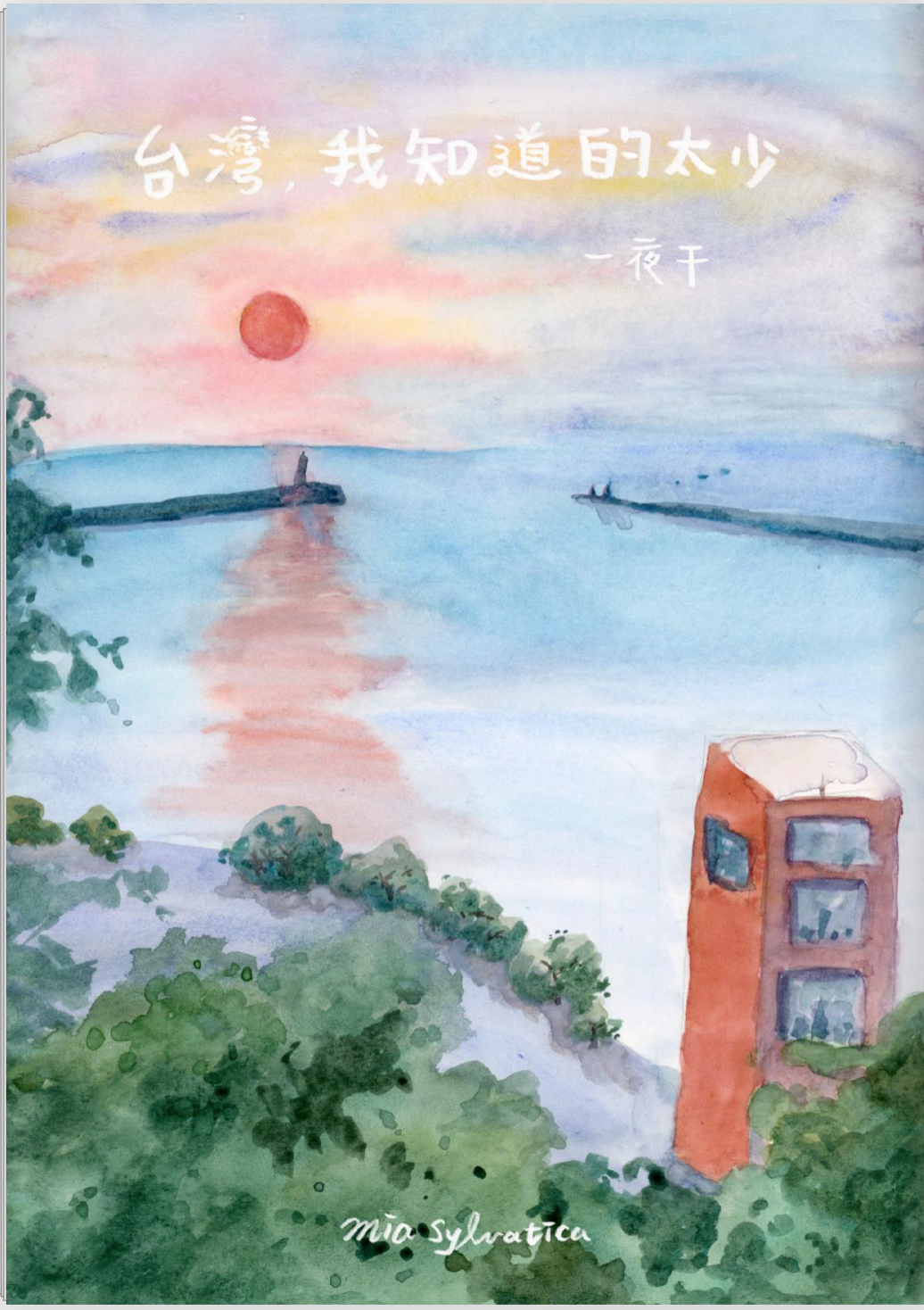
If you’d like to know how I created this comic, Taiwan, I barely know / Ichiyaboshi, which is drawn from my own daily life, I’ve shared the following two articles on Patreon: